
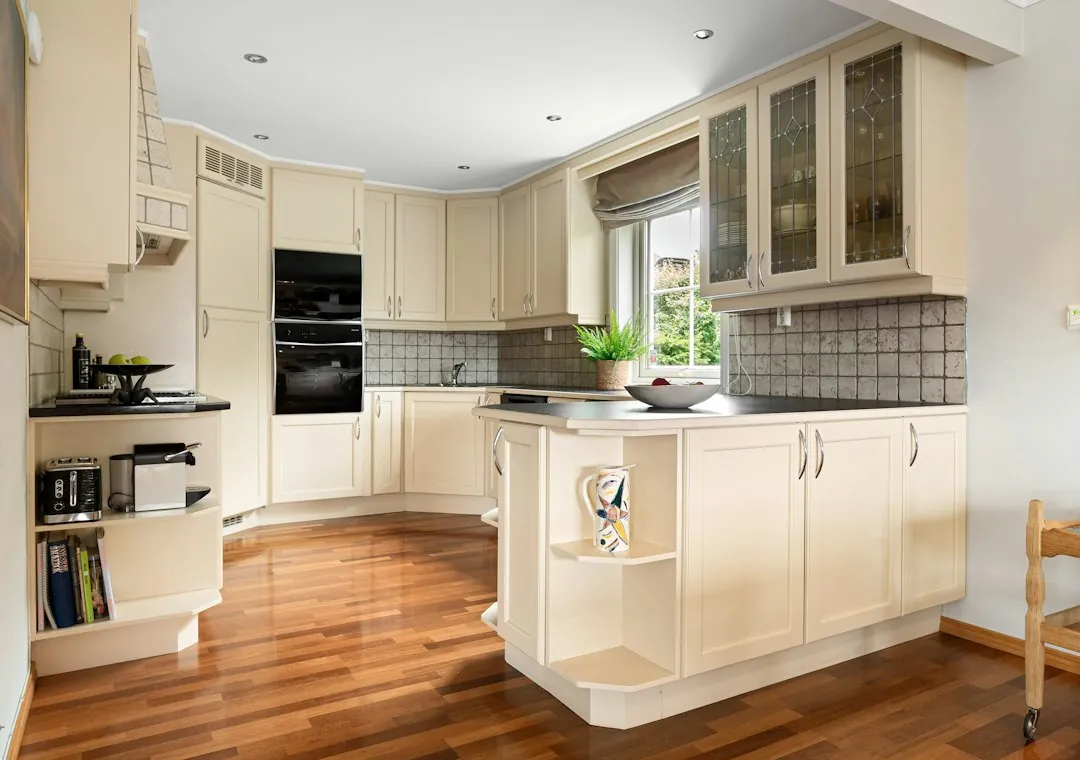
A builder has no showroom. There is no floor a customer can walk onto, nothing to stand next to, and no way to hand somebody the product before they have committed a large sum of money to a firm they met three weeks ago.
What stands in for all of that is evidence: work you have finished, in houses like theirs, photographed well enough that somebody can imagine their own. Most firms in this trade produce that evidence every single week and throw almost all of it away.
The Short Answer
Photograph the work. That is genuinely most of it, and it is the step almost everybody skips because the job is finished and the van is already loaded.
A customer deciding between three builders is not comparing methods, because they cannot judge methods. They are comparing how much each firm looks like it has done this exact job before, and that comparison is made almost entirely on pictures.
Ten jobs shot properly will do more than any amount of clever advertising, because they answer the only question that matters: have you done mine.
The Marketing Is the Work, and It Is Being Skipped
Every finished job is a piece of marketing that has already been paid for. The cost of turning it into something usable is ten minutes and a phone, at the point where the site is clean and before the furniture arrives.
The reason it does not happen is that nobody owns it. It is not the site manager's job, the customer is waiting to move back in, and by the time anyone thinks about it the scaffolding is down and the moment has gone.
The fix is a habit rather than a budget: a fixed short list of shots, taken at handover, by whoever is there. Wide from the door, the detail somebody paid extra for, and one honest shot of the thing that was difficult.
Before and After, With the Before Included
The after on its own is a nice room and could belong to anybody. It is the before that proves it was you, and the before is the shot nobody takes because at that stage it looks like a mess and nobody feels proud of it.
Take it anyway, on the first morning, from a position you can stand in again at the end. The pair is worth many times the two pictures separately, because the distance between them is the entire argument for hiring you.
The same applies to the middle. Structural work, first fix, the bit that was rotten behind the plaster. Anybody can paint a wall, and customers know that; what they are nervous about is what you found and what you did about it.
They Search for the Job, Not for You
Almost nobody searches for a builder in the abstract. They search for the thing they want doing: a loft conversion, a rear extension, a bathroom, a barn, a wall that has cracked and worries them.
That means your work should be organised and described by job type rather than as an undifferentiated gallery. A page or a highlight per kind of work you actually want more of will be found by people who want that exact thing, and it doubles as the answer to the question they are about to ask you anyway.
It also means you should stop showing the jobs you do not want. A portfolio full of small repairs will bring more small repairs, however good they look.
The Quote Is Part of the Marketing
For most firms in this trade the quote is the last thing the customer sees before deciding, and it is usually the weakest thing the firm produces: a number, a few lines, sent in a way that makes it hard to compare.
The customer is not able to judge whether the price is right, so they judge everything around it. How quickly it arrived, whether it makes clear what is and is not included, whether it mentions the things they were worried about, and whether it looks like the same firm whose photographs they liked.
A quote that reads like it was written for them, and that names the exclusions honestly, wins work against cheaper quotes regularly enough that it is worth treating as a document rather than an email.
The Awkward Things Customers Worry About
People are not mainly worried about the finish. They are worried about being left halfway, about the price changing, about the mess, and about not being able to get hold of you once the deposit has gone.
Almost nobody addresses these directly, which is exactly why doing so works. Say what happens if something is found behind a wall, say how variations get priced, say who they can call and when, say how long the site stays each day and what gets covered.
None of that is marketing language and that is the point. It reads as somebody who has had the conversation before, which is the single most reassuring thing a builder can sound like.
Where This Agency Sits
We work remotely from Durrës, in Italian, English, Spanish and Albanian, for businesses in Albania, Italy, Switzerland, the rest of Europe and the United States. We run the channels, produce and edit the photography and video, run the campaigns, and call and qualify every enquiry before it reaches whoever prices the work.
Across seven Meta campaigns in one month, for one client, that has meant 6,150 leads from 1,084,529 people reached, at a blended 1.87 euro per lead.
For a building firm we would usually start with the archive rather than with advertising, because most firms have years of finished work sitting on phones, and material that already exists is cheaper than material that has to be created.
The Short Version
- You have no showroom, so photographs of finished work are the product demonstration.
- Every job is marketing you have already paid for. Ten minutes at handover is the whole cost.
- The before proves it was you. Take it on the first morning from a spot you can stand in again.
- People search for the job, not for a builder. Organise the work by job type, and stop showing work you do not want.
- The quote is the last thing they see. Treat it as a document, and name the exclusions honestly.
Frequently Asked Questions
We get all our work by word of mouth. Why would we need any of this?
Referrals bring you the introduction, not the decision, and the two are separate. Someone handed your name still has to satisfy themselves you have done work like theirs, and if there is nothing to find they will ask the two other builders as well. Photographs of finished jobs make a referral close faster rather than replacing it.
Our customers do not want their houses on social media.
Many do not, and that has to be respected, but the objection is usually narrower than it sounds. Ask at handover rather than at the start, offer to keep the location and any identifying details out, and shoot rooms rather than homes. Refusals are far less common once people can see it is about the work and not about them.
Is it worth advertising, or should we just post the work?
Post first. Advertising into an empty profile spends money persuading people to look at nothing, whereas advertising into two years of finished jobs is putting budget behind proof that already convinces. Once there is a body of work to point at, paid campaigns for the specific job types you want more of become straightforward.
Keep Reading
- Why Professional Photo & Video Editing Elevates Your Brand
- The Window Is the Easy Part. The Home Visit Is the Sale.
Related service: photo and video editing
Back to Blog