
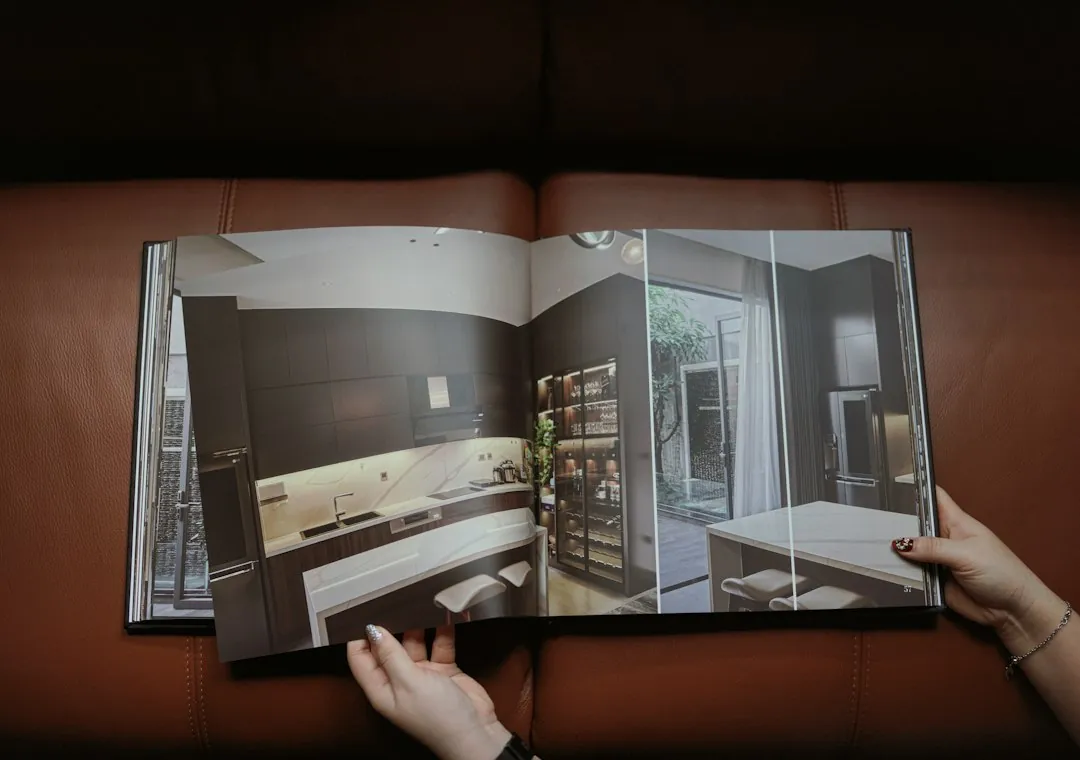
A catalogue shouldn't feel like a spreadsheet with pictures. Yet that's exactly what most of them are: a grid of products, a few specs, a price, repeated until the pages run out. It gets the information across, but it does nothing to make anyone actually want to buy.
Done well, a catalogue is something else entirely, a curated visual experience that tells your brand's story and turns browsing into buying. It's one of the few marketing pieces a customer will willingly hold, keep, and come back to. This post is about how we turn a plain list of products into something worth keeping.
A Catalogue Is a Salesperson on Paper
Think of your best salesperson: they do more than recite features. They read the customer, tell a story, highlight what matters, and guide the person toward a decision. A great catalogue does all of that silently, on the page, when nobody from your team is in the room.
That's a lot of responsibility for a document, and it's why a catalogue deserves more thought than "put the products in a PDF." It represents your brand at the exact moment someone is deciding whether to spend money with you. Treated as an afterthought, it talks them out of it. Treated as a sales tool, it does the convincing for you.
A List Informs; a Story Sells
The fastest way to lose a reader is to hand them an undifferentiated wall of products. Without a sense of order or priority, everything competes for attention and nothing wins it. A strong catalogue is curated: it groups products in a way that makes sense, leads with the pieces that matter most, and gives the eye room to breathe.
Even better catalogues have a narrative. They open with something aspirational, build through categories in a logical flow, and place hero products where the reader naturally pauses. You're doing more than showing what you sell; you're guiding someone through it, the way a good shop is laid out to lead you gently toward the till.
Design Is How It Feels to Hold
Before a customer reads a single word, they feel a catalogue: the weight of the paper, the generosity of the whitespace, the confidence of the typography. Those impressions set the value of everything inside. A cramped, cluttered layout makes even premium products look cheap; a considered one makes modest products feel like a treat.
Consistency is what ties it together into a brand rather than a collection of pages. The same colours, the same fonts, the same spacing and rhythm throughout signal that a real, organised business stands behind the products. That cohesion is exactly what earns a customer's trust before you've made a single claim.
This is why templates only get you so far. An off-the-shelf layout can hold your products, but it can't carry your brand, and customers can feel the difference between something designed for you and something poured into a generic frame.
Photography Does the Heavy Lifting
In a catalogue, your photography is your product. Nobody can touch the item, so the image has to do all the persuading, which is why professional photo and video work matters more here than almost anywhere else. Flat, inconsistent product shots undercut everything the design is trying to do.
And when a product doesn't physically exist yet, or can't be photographed the way you'd like, photorealistic renders fill the gap, letting you present items in perfect light, in the perfect setting, long before a sample is ever made. Either way, strong visuals are what turn a page into a sale.
Consistency matters here too: products shot in the same style, light and angle look like a considered range rather than a jumble sourced from different places. That uniformity is a large part of what makes a whole catalogue feel premium.
Guide the Eye, Guide the Decision
Good catalogue design is direction, not decoration. Through size, placement and contrast, it decides what the reader sees first, what they linger on, and what they do next. Hero products get the space they deserve, related items sit naturally together, and the eye is led rather than left to wander.
Just as importantly, a catalogue that sells makes acting easy. Clear pricing where it helps, obvious product codes, and an unmissable way to order or enquire mean that the moment someone decides "I want this," there's nothing standing between the impulse and the purchase.
Little of this is accidental. Every spread is a series of decisions about what earns attention and what merely supports it, so that by the time a reader reaches the end, they've been guided, gently and invisibly, toward the products most likely to be right for them.
Print, Digital, or Both
A printed catalogue still has real power: it's tactile, it lingers on a desk, and handing one over feels generous in a way a link never quite does. But it no longer has to stand alone. A digital catalogue or a well-made PDF can live on your website, be emailed in seconds, and reach people far beyond your postal list.
Digital also opens up things print can't: clickable products, always-current pricing, and a direct path from the page to your checkout or contact form. For most businesses the smart answer isn't print or digital. It's the same beautifully designed catalogue, working in both.
The Details That Signal Quality
Customers rarely notice these things consciously, but they feel every one of them, and each tells them how much care sits behind your brand:
- Paper and finish: the right stock and a considered finish make print feel valuable in the hand.
- Consistent styling: one cohesive look across every page, not a patchwork of templates.
- Room to breathe: generous whitespace so products feel premium, not crammed in.
- Accurate, honest images: so what arrives matches what sold them, and trust survives the delivery.
One Catalogue, Many Jobs
A well-made catalogue quickly becomes one of the most versatile things you own. It's a leave-behind after a sales meeting, a centrepiece on a trade-show stand, the attachment that answers "can you send me your range?" in a single click, and a quiet credibility-builder that makes a small business look established.
Because it works so hard across so many moments, it's rarely a cost that just sits on a shelf. The effort you put into getting it right is repaid every time you hand one over, email one out, or watch a customer flip through it and land on exactly the page you hoped they would.
The Short Version
A catalogue is one of the rare pieces of marketing a customer chooses to spend time with, so it's worth making it more than a list. Curate it like a story, design it like it matters, photograph it properly, and guide the reader toward the decision, and it stops being a reference document and starts being a salesperson that never clocks off.
Turn your products into an experience, and browsing becomes buying.
Frequently Asked Questions
What makes a catalogue actually sell?
Treating it as more than a product list: curating it like a story, designing it so it feels good to hold, using strong, consistent photography, and guiding the reader toward an easy way to order or enquire.
Should my catalogue be print or digital?
For most businesses, both. Print is tactile and lingers on a desk, while a digital catalogue or PDF lives on your website, is emailed in seconds and can link straight to your checkout. The same design can work in both.
What if my products aren't photographed or don't exist yet?
Photorealistic renders can present items in perfect light and setting before a sample is ever made, so a catalogue can look complete and consistent even when some products can't be photographed.
Keep Reading
- Why professional photo & video editing elevates your brand
- Photorealistic renders: sell the vision before it's built
Related service: catalogue design
Back to Blog